In short
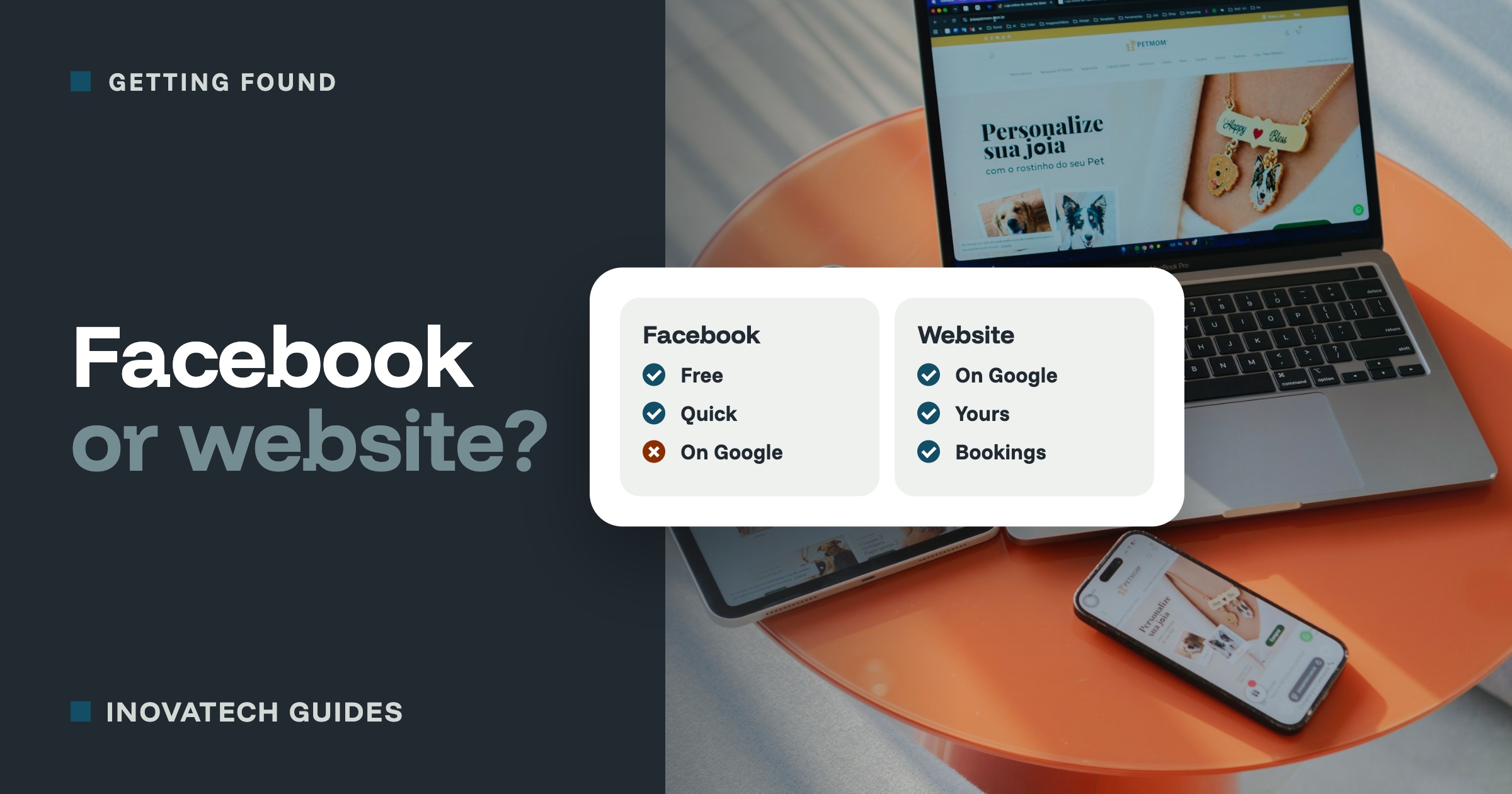
- A Facebook page is free, quick, and good for keeping regular customers up to date.
- It is weak at bringing in new customers from Google, and you do not control it: rules, reach and access can change overnight.
- If new customers find you by searching, or you take bookings or enquiries for bigger jobs, a simple website usually earns its keep.
What a Facebook page does well
- It is free and quick. You can set one up in an afternoon and post from your phone in a minute.
- It suits people who already know you. Today’s specials, a change to opening hours, photos of new stock, a thank-you after a busy weekend.
- It is where local conversations happen. Town and village groups are often the first place people ask for a recommendation.
- Messages and recommendations sit in one place, so customers can ask a quick question or leave a kind word.
Where a Facebook page falls short
New customers search Google, not Facebook
When someone types “plumber near me” or “cafe in Swanage” into Google, the results are mostly map listings and websites. Facebook pages tend to appear when someone searches for your exact business name, which means they already know about you. For bringing in people who have never heard of you, a website and a Google Business Profile do far more.
Not everyone can see it properly
Some of your customers are not on Facebook at all, and others prefer not to log in. People who are not signed in are often asked to log in after a few seconds of scrolling, and many simply leave.
Only some of your followers see each post
Facebook decides who sees what. For most business pages, only a small share of followers see any given post unless you pay to boost it. Your post about this weekend’s opening hours may not reach the people who need it.
You do not own it
Pages get hacked, locked or suspended, sometimes by mistake. Getting help from Facebook can take weeks, and there is rarely a person to talk to. If you lose access, your page, your photos and every recommendation can go with it. A website on your own web address stays yours, and you can move it to another provider whenever you like.
It can look less established
For bigger decisions, such as booking a holiday let, hiring a builder or choosing a wedding venue, many people look for a website before they trust a business. A Facebook page alone can make a solid business look like a hobby.
There is only so much you can put on it
A website can hold everything a customer needs to decide: full service details, menus, a booking calendar, answers to common questions, your policies, and an enquiry form that sends the details straight to you. Facebook gives you a fixed layout and a stream of posts that slides out of view.
A quick way to decide
A Facebook page may be enough for now if
- Most of your customers are regulars or come by word of mouth.
- You are already as busy as you want to be.
- What you offer is simple and very local, such as a market stall or a village service.
You probably need a website as well if
- New customers find you by searching on Google.
- You take bookings, or enquiries for work worth a fair amount.
- You run a holiday let or B&B and want more direct bookings, with less commission paid to booking sites.
- Customers ask the same questions before they buy, and you would rather the answers were written down once.
- You want an email address on your own name, such as hello@yourbusiness.co.uk, rather than a free one.
The best answer is usually both
The two work well together. Think of your website as your shop and your Facebook page as the noticeboard outside. Post on Facebook to stay in touch, and link to your website for the details, the booking form or the menu. Add a free Google Business Profile pointing to your website, and you are covered in the three places local customers look.
If you are sticking with Facebook for now
- Fill in every section of your page: category, hours, the area you cover, and how to contact you.
- Set up a Google Business Profile. It is free, and for local searches it matters more than Facebook.
- Switch on two-step verification, and add a second person you trust as an admin of the page, so one lost login does not lose the page.
- Make sure your recovery email and phone number are up to date. They are what gets you back in if anything goes wrong.
- Consider registering your web address now, even before you have a website, so nobody else takes it.
Thinking about a website? We build simple, fast websites for small businesses across Swanage, Purbeck and Dorset that work alongside your Facebook page and Google profile, not instead of them. See our web design page, or tell us what you have now and we will say honestly whether a website would help.